
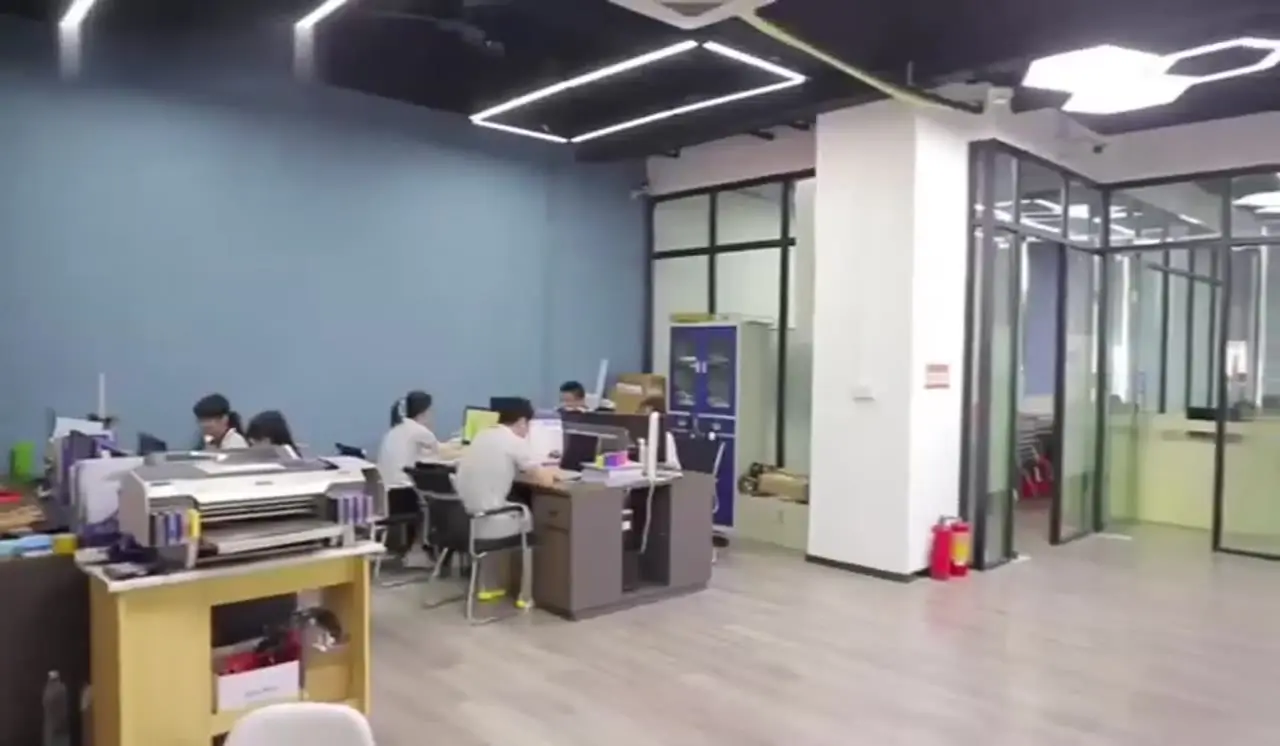
In-process control
Printing, circuit, cutting, lamination, and assembly checks are placed where defects can still be contained and corrected.

Quality is planned from the drawing and material release through printing, circuit production, lamination, assembly, final inspection, documentation, and revision control.
Inspection must follow the real failure risks of each project. The released drawing, artwork, approved sample, material requirements, electrical specification, and cosmetic criteria establish what is checked.
Review films, adhesives, inks, domes, LEDs, connectors, circuit materials, backers, and packing materials against the released purchase and project requirements.
Check registration, legends, color references, opacity, windows, dead-front graphics, surface finish, and visible contamination at defined production stages.
Review trace condition, insulation, contact areas, tail geometry, pinout, connector details, and continuity according to the circuit specification.
Verify cut features, alignment, openings, adhesive condition, dome and LED position, layer registration, bubbles, particles, and edge condition.
Perform the agreed appearance, dimensional, electrical, key-response, lighting, connector, labeling, and packing checks before release.
Keep released revisions, approved references, inspection criteria, nonconformance handling, and production changes connected to the customer requirement.
ISO certification defines the management framework. The practical quality plan still has to translate each OEM drawing and application into inspection points that operators and inspectors can follow.
Printing, circuit, cutting, lamination, and assembly checks are placed where defects can still be contained and corrected.

Released drawings, artwork, circuit data, specifications, samples, and work instructions must identify the active revision.
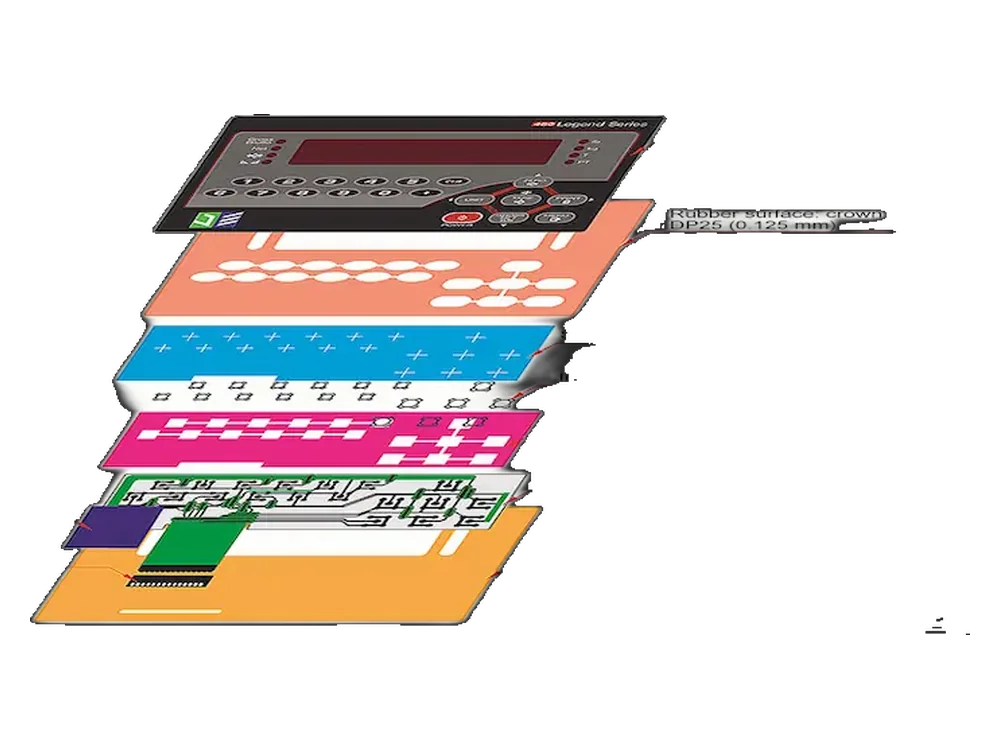
Appearance, function, labeling, quantity, and packing are reviewed against the agreed release criteria before shipment.
ISO certification defines the management framework. The practical quality plan still has to translate each OEM drawing and application into inspection points that operators and inspectors can follow.
Released drawings, artwork, circuit data, specifications, samples, and work instructions must identify the active revision.
Materials and purchased components are checked according to the relevant requirement before they enter the production route.
Printing, circuit, cutting, lamination, and assembly checks are placed where defects can still be contained and corrected.
Appearance, function, labeling, quantity, and packing are reviewed against the agreed release criteria before shipment.
Deviations should be identified, segregated, reviewed, and resolved before affected parts move to the next stage or shipment.
Material, artwork, circuit, process, or supplier changes require review against the approved product and customer expectations.
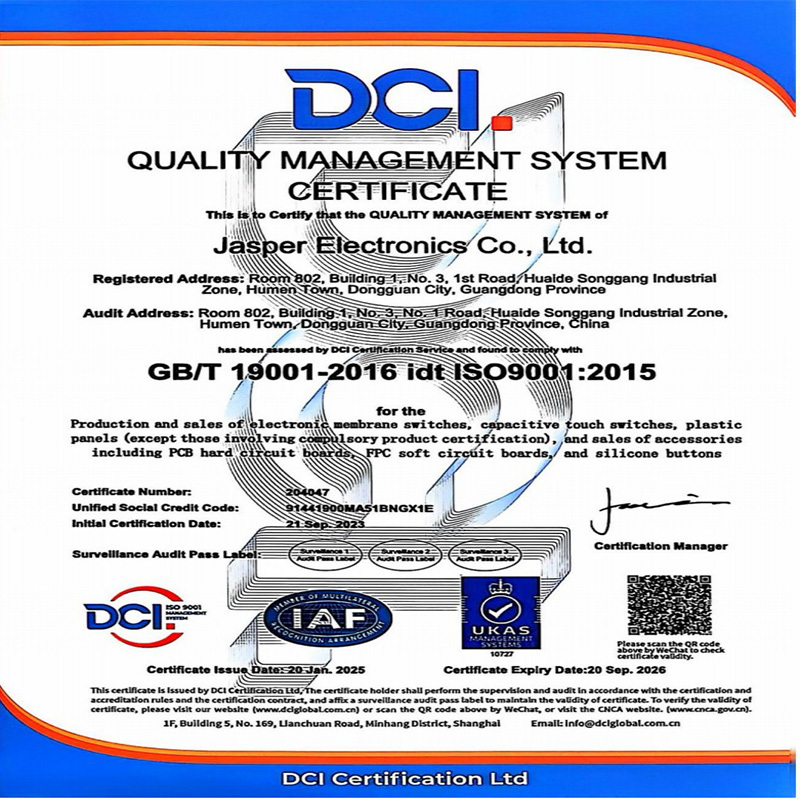
The published JASPER certificate image records an ISO 9001:2015 quality management system certificate covering electronic interface products. Open the image for document review and request the current file before supplier approval.
Published certificate image: issued 20 January 2025 and expired 20 January 2026. Request the current certificate and verify its active status before supplier approval.
Not every project needs the same checks. A waterproof outdoor keypad, a cosmetic display overlay, a backlit HMI, and a printed medical electrode have different critical characteristics.
Legends, color reference, surface finish, scratches, particles, windows, dead-front appearance, adhesive exposure, and edge condition.
Outline, holes, windows, tail location, connector position, layer registration, embossed features, and agreed critical dimensions.
Continuity, shorts or opens, pinout, contact response, LEDs, connector orientation, and project-specific functional behavior.
Key feel, dome placement, embossing, tail bend, stiffener, backer, gasket, adhesive fit, and installation boundary.
Requested material declarations, adhesive selection, cleaning exposure, outdoor use, sealing targets, and agreed verification scope.
Part revision, labels, quantity, surface protection, tray or bag method, shipment marking, and customer-specific packing instructions.
Go beyond general quality language with defined inspection records, traceability links, and engineering-change responsibilities.
Plan project-specific incoming, in-process, final, and outgoing inspection with active revisions, material and lot linkage, fixtures, approved samples, records, and traceability boundaries.
Review quality evidenceControl membrane switch and HMI changes across drawings, artwork, circuits, BOMs, materials, suppliers, tooling, process, inspection, samples, records, and customer approval.
Review quality evidenceA sample can look acceptable while leaving production teams without measurable release criteria. Record what matters while engineering, purchasing, and quality are reviewing the same part.
Identify the dimensions, graphics, electrical points, key response, sealing boundaries, materials, and cosmetic zones that determine product acceptance.
Clarify whether the released drawing, approved sample, color reference, artwork file, test method, or written specification controls when evidence conflicts.
State which inspection reports, declarations, material documents, sample records, labeling, or change notifications are required with production.
No. ISO 9001:2015 provides the quality-management framework, while inspection points and acceptance criteria must still be defined for the drawing, construction, application, and customer requirement.
Applicable material and supplier documents can be reviewed for the selected construction. The required declaration, material scope, and document format should be confirmed before sampling.
No. Electrical, cosmetic, dimensional, mechanical, environmental, and packing checks are selected according to the product design and agreed quality plan.
Include critical dimensions, cosmetic criteria, color reference, electrical test requirement, material or compliance needs, sample approval method, required records, and change-notification expectations.
Share the product risks, acceptance criteria, compliance needs, and required records with the RFQ so inspection can be planned before the first sample.
Share the project basics. JASPER will review the stack, materials, connector, quantity, and production risks.